
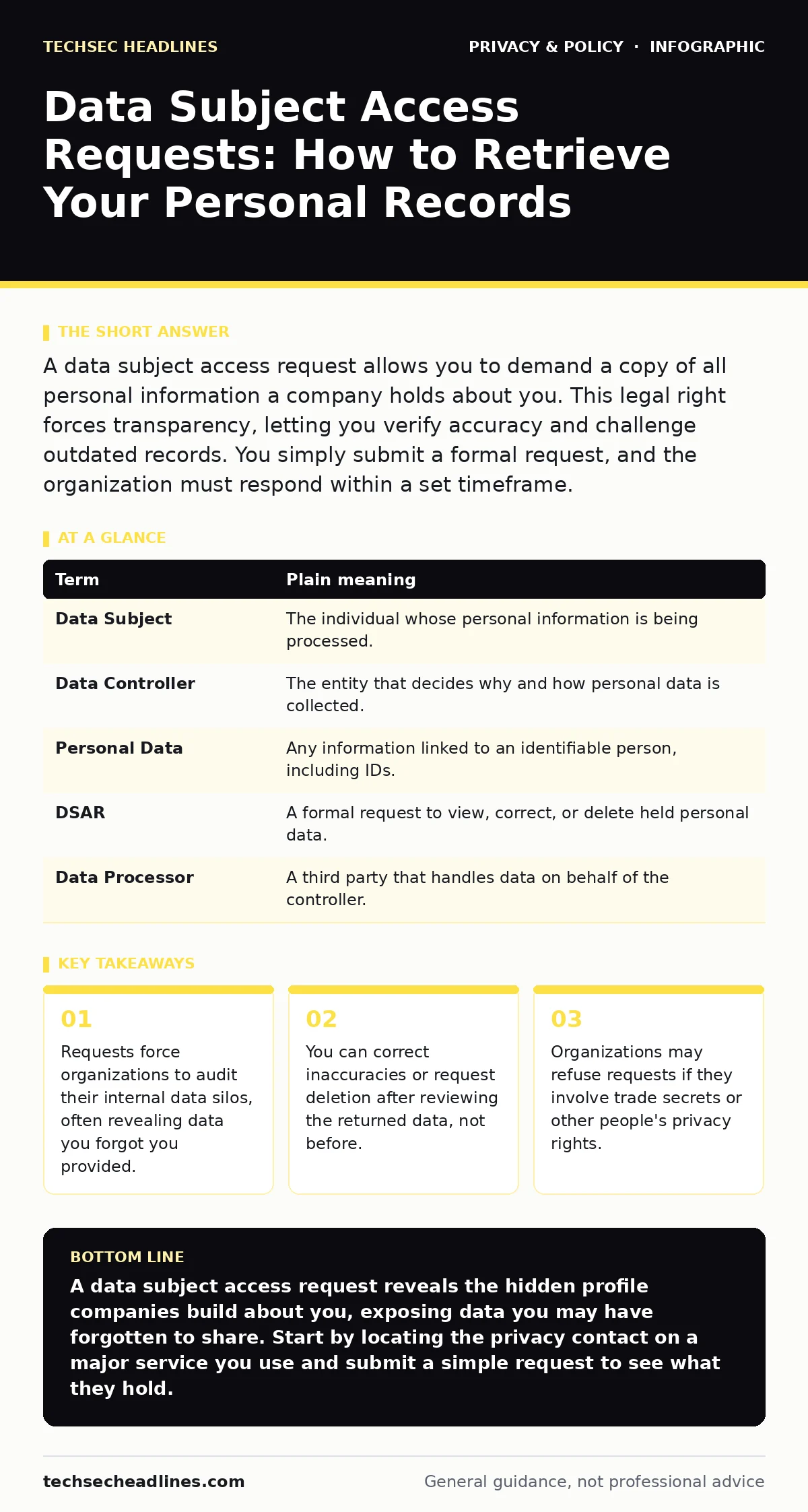
A data subject access request allows you to demand a copy of all personal information a company holds about you. This legal right forces transparency, letting you verify accuracy and challenge outdated records. You simply submit a formal request, and the organization must respond within a set timeframe.
The Library of You
Imagine a public library that quietly writes a book about every person who walks through the doors. Every time you check out a book, the librarian notes your mood. When you return a book late, they add a chapter about your tardiness. You never asked for this book. You never read it. It sits on a shelf in the back, growing thicker every year.
Now imagine you walk up to the desk and ask for a copy of that book. The librarian must pull it from the shelf, photocopy every page, and hand it to you. This is the core mechanism of a data subject access request. It transforms you from a passive subject into an active auditor of your own digital life.
Defining the Request
A data subject access request, often called a DSAR, is a formal demand to an organization for all personal data it processes about you. Personal data means any information that can identify you, directly or indirectly. This includes obvious things like your name and email address. It also includes obscure data like your browsing history, location pings, or device identifiers.
The organization holding this data is the data controller. The data controller determines why and how your data is used. When you send a request, you are asking the controller to prove what they have and why they keep it. This right exists in many major privacy frameworks, ensuring that companies cannot hide their data practices behind vague terms of service.
| Term | Plain meaning |
|---|---|
| Data Subject | The individual whose personal information is being processed. |
| Data Controller | The entity that decides why and how personal data is collected. |
| Personal Data | Any information linked to an identifiable person, including IDs. |
| DSAR | A formal request to view, correct, or delete held personal data. |
| Data Processor | A third party that handles data on behalf of the controller. |
The Hidden Cost of Transparency
People often think DSARs are only for checking email addresses. The surprise is the volume and type of data returned. Organizations often store data in disparate systems that do not talk to each other. When you request your data, the controller must search every database, backup tape, and third-party service.
This process reveals data silos. You might find that a fitness app shared your location with an advertising partner you never noticed. This connects to the broader issue of ad tracking, where your movements are mapped to create a behavioral profile. Seeing this data in writing changes how you view your digital footprint. It is no longer abstract; it is a concrete inventory of your life.
Navigating Refusals and Limits
Organizations can refuse a DSAR, but they must give a specific reason. They might claim the request is manifestly unfounded or excessive. They might argue that providing the data would reveal trade secrets or compromise the rights of another person. For example, if you request chat logs, the company must redact the other person's information.
This limitation highlights the tension between individual privacy and collective security. It also relates to digital privacy rights, which balance personal control against corporate and state interests. If you believe a refusal is unjustified, you can usually appeal to a supervisory authority. This oversight body ensures companies do not abuse their power to ignore your rights.
First Practical Steps
You do not need a lawyer to start this process. Most organizations have a dedicated email address or web form for privacy requests. Look for the "Privacy Policy" link at the bottom of their website. Search for "Data Subject Access Request" or "Your Rights" within that document.
- Draft a clear email stating you are making a DSAR under applicable law.
- Include enough information to verify your identity, such as your account email or user ID.
- Ask for the data in a commonly used electronic format, like CSV or JSON.
Beyond the Request
Receiving your data is only the first step. Review the files carefully. Look for inaccuracies, outdated information, or data you did not consent to share. If you find errors, you can request correction. If you find data that should not exist, you can request deletion.
This process empowers you to manage your digital presence. It also informs how you use services. If you find excessive data collection, you might switch to privacy-focused browsers that limit tracking. You might use email aliases to mask your real address from new services. Understanding what companies hold helps you make better choices about mobile app permission abuse and smart home privacy risks.
The Long Game
DSARs are a tool, not a cure. They reveal the data you have already given away. They do not stop future collection. You must combine requests with proactive habits. Limit what you share. Use tools that minimize your footprint. Read the children's privacy laws if you manage accounts for minors, as they offer stricter protections.
The goal is not to erase yourself from the internet. The goal is to ensure the data that exists is accurate and used fairly. By regularly exercising this right, you force organizations to treat your data with care. You shift the dynamic from secrecy to accountability. This small action builds a stronger foundation for your long-term privacy.
Key takeaways
- Requests force organizations to audit their internal data silos, often revealing data you forgot you provided.
- You can correct inaccuracies or request deletion after reviewing the returned data, not before.
- Organizations may refuse requests if they involve trade secrets or other people's privacy rights.
A data subject access request reveals the hidden profile companies build about you, exposing data you may have forgotten to share. Start by locating the privacy contact on a major service you use and submit a simple request to see what they hold.
Frequently asked questions
Do I have to pay for my data?
Generally, no. Organizations must provide the data free of charge unless the request is excessive or repetitive.
How do I prove my identity?
The organization will ask for verification. Use the same credentials you used to create the account, like your email or username.
What if the company ignores me?
You can file a complaint with the relevant data protection authority in your jurisdiction. They can investigate and penalize the company.
Can I ask for data about my family?
Only if you are the legal guardian or have explicit consent. You cannot request data about other adults without their permission.
How this guide was produced: written by the TechSec Headlines editorial team with AI assistance, checked against the public references listed below, and reviewed when the facts change. See our editorial policy or report an error.