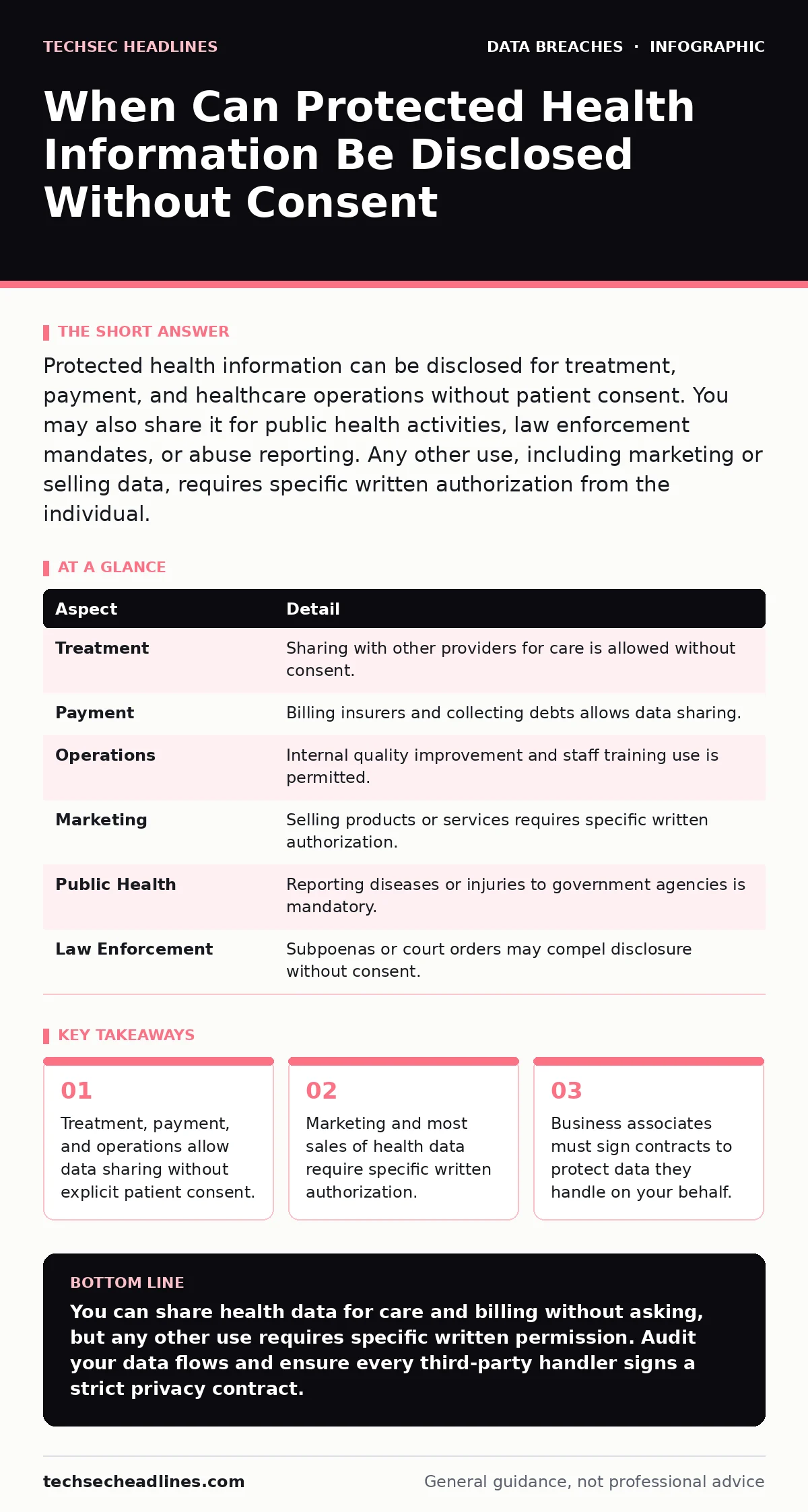
Protected health information can be disclosed for treatment, payment, and healthcare operations without patient consent. You may also share it for public health activities, law enforcement mandates, or abuse reporting. Any other use, including marketing or selling data, requires specific written authorization from the individual.
The Lock on Your Medical History
Imagine your medical records are like a library book. The librarian can check it out, return it, and repair it without asking you every time. That is how healthcare works. The librarian needs the book to do their job. Protected health information is any data that identifies a person and relates to their health, past, present, or future care. It includes names, addresses, birth dates, and medical records. This definition covers digital files, paper charts, and even conversations between staff.
The rules governing this data are strict because the stakes are high. Health data is valuable on the black market and highly sensitive personally. Understanding when you can share this data prevents legal trouble and builds trust. Many people think they need permission for every single interaction. They do not. The system relies on implied consent for core medical functions.
At a Glance: Disclosure Rules
| Aspect | Detail |
|---|---|
| Treatment | Sharing with other providers for care is allowed without consent. |
| Payment | Billing insurers and collecting debts allows data sharing. |
| Operations | Internal quality improvement and staff training use is permitted. |
| Marketing | Selling products or services requires specific written authorization. |
| Public Health | Reporting diseases or injuries to government agencies is mandatory. |
| Law Enforcement | Subpoenas or court orders may compel disclosure without consent. |
When Can Protected Health Information Be Disclosed
When can protected health information be disclosed without the patient signing a form? The answer lies in three main categories: treatment, payment, and healthcare operations. These are the pillars of the healthcare system. Providers share data freely among themselves to ensure you get the right care. If your surgeon sends notes to your primary care doctor, that is treatment. If the hospital bills your insurance company, that is payment. If the clinic reviews its error rates to improve safety, that is operations.
You do not need to sign a separate form for these activities. Your initial agreement to receive care implies this consent. However, this implied consent does not cover everything. It does not allow the hospital to sell your data to advertisers. It does not allow them to share your records with a former employer. It does not allow them to use your story in a marketing brochure. For those actions, you must give specific, written permission. This distinction is the most common point of confusion.
The Hidden Costs of Data Sharing
Sharing data is not just about legal compliance. It is about risk management. Every time you send protected health information, you create a new point of failure. If you email records to a specialist, that email can be intercepted. If you fax them, the machine can be misconfigured. If you upload them to a cloud server, that server can be hacked. The more entities that touch your data, the harder it is to control.
Consider the concept of business associates. These are third parties who handle health data for you. A billing company, a cloud storage provider, or an IT consultant are all business associates. You cannot just hand them data and hope they keep it safe. You must sign a contract that legally binds them to protect it. This contract is called a Business Associate Agreement. It shifts some liability to them, but you remain responsible for ensuring they follow the rules. If they fail, you often face the first wave of regulatory scrutiny.
What People Usually Get Wrong
Many organizations believe that de-identifying data removes all restrictions. De-identification means removing all 18 specific identifiers, such as names, ZIP codes, and dates. If you do this correctly, the data is no longer protected health information. You can share it freely. However, the bar for de-identification is very high. Simple removal of names is not enough. You must ensure there is no way to re-identify the person. This often requires statistical validation or expert determination.
Another common error is confusing consent with authorization. Consent is broad and implied for treatment. Authorization is specific and written for other uses. If a patient signs a general privacy notice, that is not authorization for marketing. You need a separate document that details exactly what data is shared, with whom, and for what purpose. The patient must be able to revoke this authorization at any time. Failing to distinguish these two concepts leads to accidental violations.
See also: Difference Between RBAC and Principle of Least Privilege Explained
The Role of Technology in Privacy
Technology can help enforce these rules, but it can also break them. Encryption protects data in transit and at rest. If data is encrypted, it is unreadable without the key. This is a strong defense against theft. However, encryption does not prevent authorized insiders from misusing data. If a nurse accesses a celebrity’s file out of curiosity, encryption does not stop them. You need access controls and audit logs to catch this behavior.
The principle of least privilege is critical here. This means giving users only the access they need to do their job. A receptionist does not need to see surgical notes. A billing clerk does not need to see psychiatric evaluations. Limiting access reduces the damage if an account is compromised. It also makes it easier to detect unusual activity. If a user suddenly accesses hundreds of records, the system should flag it.
Handling Breaches and Exceptions
Even with the best controls, breaches happen. When they do, the rules for disclosure change. You must notify affected individuals, the government, and sometimes the media. The timeline for this notification is strict. You usually have 60 days to report a breach affecting 500 or more people. For smaller breaches, you log them and report them annually.
There are exceptions to the notification rule. If the data was encrypted, you may not need to notify anyone. The assumption is that the data was unreadable and therefore not compromised. This is why encryption is so valuable. It can save you from massive notification costs and reputational damage. However, you must be certain the encryption keys were not also stolen. If the keys are compromised, the encryption is useless.
Protecting Against Emerging Threats
Threats to health data are evolving. Synthetic identity fraud is a growing concern. Criminals combine real and fake information to create new identities. They can use small amounts of health data to build these identities. This makes it hard to detect fraud because the person does not exist. Traditional credit checks do not catch this. You need specialized monitoring tools.
Data extortion is another risk. Hackers steal data and threaten to release it unless you pay. They often target hospitals because downtime costs money and lives are at stake. Having a backup plan is vital. You should test your backups regularly. Ensure you can restore data quickly. Do not negotiate with criminals. Paying them does not guarantee they will delete the data. It often marks you as a target for future attacks.
The Human Factor in Security
Technology fails, but people often fail first. Phishing attacks remain the top cause of data breaches. Attackers send emails that look like they come from a colleague or a vendor. They ask for credentials or attachments. Once inside, they move laterally to find health data. Training employees to recognize these attacks is your first line of defense.
SIM swap fraud is a newer threat. Attackers convince a mobile carrier to transfer a victim’s phone number to a new SIM card. They then intercept two-factor authentication codes. This allows them to reset passwords and access accounts. Health organizations should use hardware security keys or app-based authenticators instead of SMS codes. SMS is not secure enough for high-value accounts.
Final Steps for Compliance
Compliance is not a one-time project. It is an ongoing process. You must review your policies regularly. Update them as laws change. Train your staff annually. Monitor your systems for suspicious activity. Conduct risk assessments to identify new vulnerabilities.
The goal is to create a culture of privacy. Everyone, from the CEO to the intern, must understand the value of protected health information. They must know how to handle it safely. They must report incidents immediately. When privacy is everyone’s responsibility, you build a stronger defense. This protects your patients and your organization.
Key takeaways
- Treatment, payment, and operations allow data sharing without explicit patient consent.
- Marketing and most sales of health data require specific written authorization.
- Business associates must sign contracts to protect data they handle on your behalf.
You can share health data for care and billing without asking, but any other use requires specific written permission. Audit your data flows and ensure every third-party handler signs a strict privacy contract.
Frequently asked questions
Can I share patient data with a family member?
You can share information with a family member if the patient is present and does not object, or if you believe it is in the patient's best interest. You should only share the minimum necessary information.
What is the minimum necessary standard?
The minimum necessary standard requires you to limit the health information you use or disclose to the amount needed to accomplish the intended purpose. Do not share full records if only a summary is required.
Do I need to report a breach if the data was encrypted?
If the data was encrypted with strong standards and the encryption keys were not compromised, you generally do not need to report the breach. The data is considered unreadable and not exposed.
How long must I keep privacy records?
You must keep records of privacy practices and authorizations for six years. This includes documentation of training, risk assessments, and any incidents or breaches that occurred.
How this guide was produced: written by the TechSec Headlines editorial team with AI assistance, checked against the public references listed below, and reviewed when the facts change. See our editorial policy or report an error.