
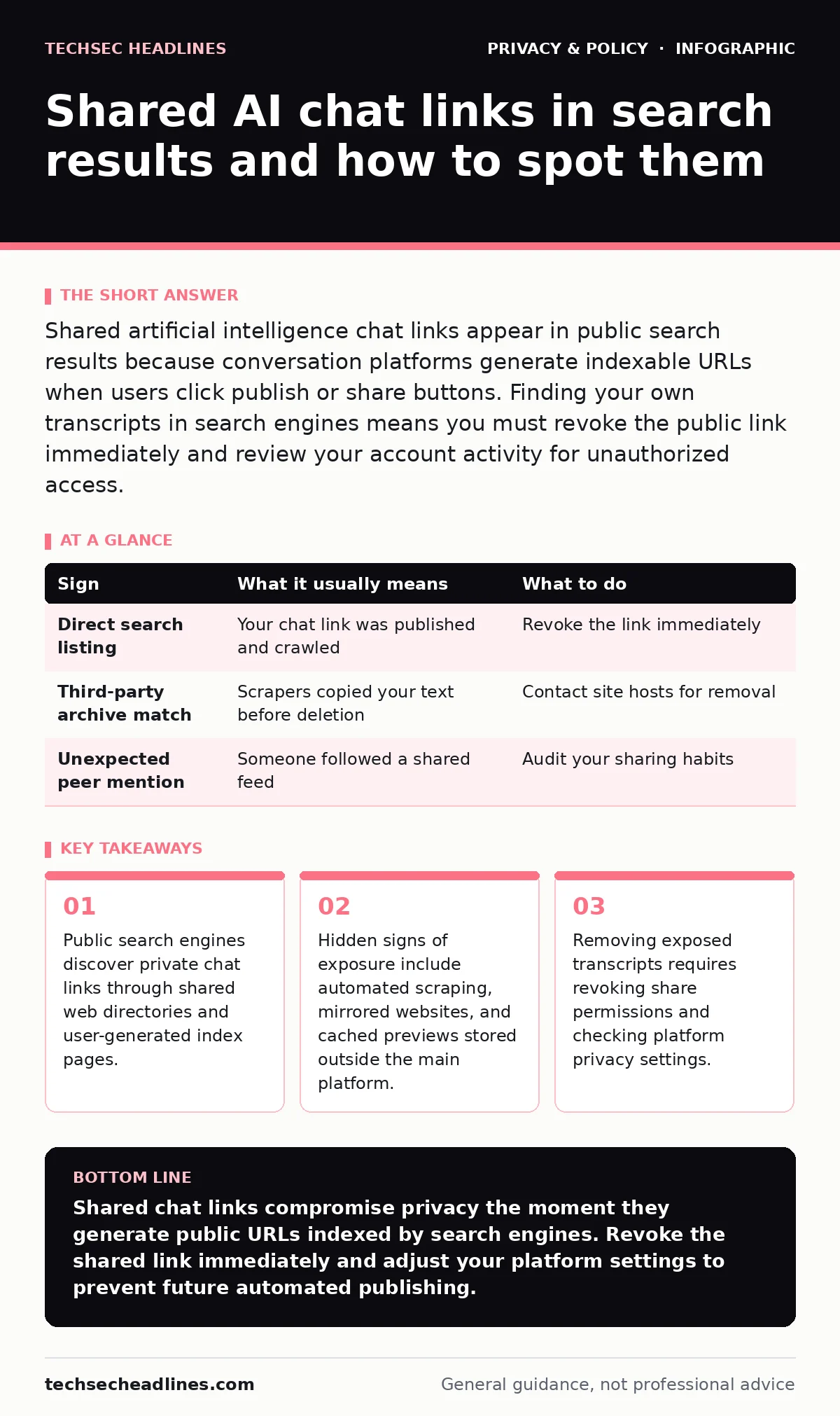
Shared artificial intelligence chat links appear in public search results because conversation platforms generate indexable URLs when users click publish or share buttons. Finding your own transcripts in search engines means you must revoke the public link immediately and review your account activity for unauthorized access.
The Obvious Warning Signs of Public AI Chats
Shared artificial intelligence chat links appear in search engine results when users generate public URLs for their private prompt sessions. Public discovery often starts when you type your own name or unique project details into a search engine and spot your private brainstorming sessions in the results. Search indexing occurs when automated web crawlers follow public hyperlinks and store page contents in searchable databases.
Another immediate indicator involves receiving unexpected feedback or mentions about private research topics from peers who stumbled across your published transcripts. Indexable URLs bypass normal authentication barriers because the generation of a share link typically strips away user session requirements. People notice these leaks fastest when search engine notification tools alert them to new indexed pages matching personal queries.
Subtle Indicators That Are Easy to Miss
Subtle warning signs often escape casual observation because exposure happens through indirect channels rather than direct search engine listings. Content scraping bots copy public chat transcripts within seconds of publication, storing those texts on third-party archive sites that persist even after you delete the original conversation.
Another hidden indicator involves cached previews and snippet text lingering in browser history or aggregator feeds long after link revocation. Cryptographic entropy in URL generation sometimes fails if predictable patterns allow automated scripts to guess sequential chat identifiers without direct search engine discovery.
Warning Sign Comparison Matrix
| Sign | What it usually means | What to do |
|---|---|---|
| Direct search listing | Your chat link was published and crawled | Revoke the link immediately |
| Third-party archive match | Scrapers copied your text before deletion | Contact site hosts for removal |
| Unexpected peer mention | Someone followed a shared feed | Audit your sharing habits |
Technical Mechanics Behind Search Indexing
Search engine discovery relies on hyperlinks, meaning a chat URL remains strictly private until shared on an indexed webpage or social media profile. Robots exclusion standards dictate how web crawlers interact with specific directories, but many conversation platforms fail to apply proper blocking directives to generated share pages.
Imagine pasting a unique chat URL into a public forum to ask for technical assistance. Web crawlers immediately index that forum thread, turning your private conversation into a permanent public record. Content delivery networks cache these pages globally, meaning simple deletion on the origin server fails to clear cached copies instantly.
Hidden Costs of Accidental Disclosure
Accidental exposure of intellectual property through chat transcripts creates severe organizational and personal risks that persist for years. Proprietary data leaks can compromise upcoming product launches or reveal confidential source code pasted into prompts for debugging assistance.
Another hidden cost involves the permanent nature of web archival projects that harvest indexed pages continuously. Revoking a link stops live traffic, but historical snapshots remain accessible to determined investigators. Using tools like email aliases for account registration helps isolate your identity, though it does not prevent prompt content from leaking if shared improperly.
See also: End-to-End Encryption Messenger Deleted Messages: What Actually Happens
Immediate Steps When You Find a Leak
Discovering your own private transcripts in search results requires immediate containment actions to halt further propagation. Link revocation tools provided by the chat platform invalidate the specific URL, returning an error page to anyone attempting access.
After revoking the link, submit removal requests to major search engines to purge cached snippets and cached page copies from public indexes. Reviewing account settings ensures no automated publishing features remain enabled for future sessions. Managing your digital footprint effectively sometimes requires cleaning up related records, much like executing data subject access requests to audit what organizations hold about you.
Key takeaways
- Public search engines discover private chat links through shared web directories and user-generated index pages.
- Hidden signs of exposure include automated scraping, mirrored websites, and cached previews stored outside the main platform.
- Removing exposed transcripts requires revoking share permissions and checking platform privacy settings.
Shared chat links compromise privacy the moment they generate public URLs indexed by search engines. Revoke the shared link immediately and adjust your platform settings to prevent future automated publishing.
Frequently asked questions
Why do chat platforms create public links by default?
Platforms often prioritize frictionless sharing and collaboration features over strict privacy, generating accessible URLs with minimal user friction.
Can search engines find chats if I do not share the link anywhere?
Search engines generally cannot discover private chats unless the URL appears on an indexed web page, public forum, or browser extension log.
Does deleting my account remove indexed chat transcripts from the web?
Deleting your account removes the original source, but web scrapers and search engine caches often retain copies indefinitely.
Are enterprise accounts immune to accidental public sharing?
Enterprise tiers typically enforce stricter default sharing policies, but human error can still bypass administrative controls.
How this guide was produced: written by the TechSec Headlines editorial team with AI assistance, checked against the public references listed below, and reviewed when the facts change. See our editorial policy or report an error.