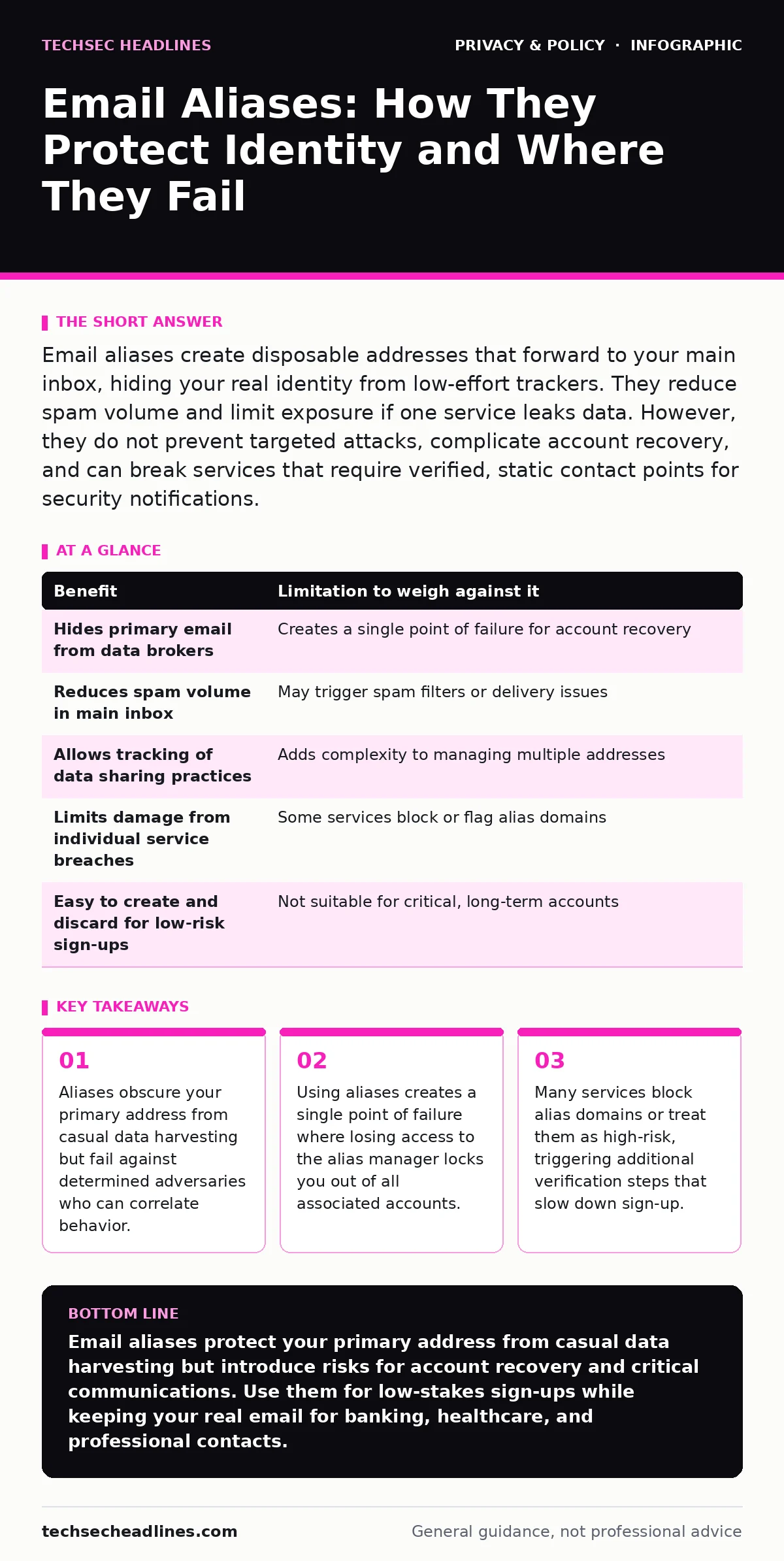
Email aliases create disposable addresses that forward to your main inbox, hiding your real identity from low-effort trackers. They reduce spam volume and limit exposure if one service leaks data. However, they do not prevent targeted attacks, complicate account recovery, and can break services that require verified, static contact points for security notifications.
The Mechanics of Address Obscuration
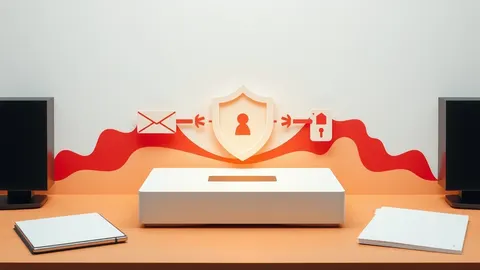
An email alias is a secondary address that forwards messages to your primary inbox. You create these aliases to interact with websites without revealing your actual email address. The mechanism is simple: the alias provider receives the message and redirects it to your main account. This separation allows you to track which service shared your information. If you receive spam at a specific alias, you know exactly which company sold or leaked that address. This method provides a layer of indirection between your digital identity and the services you use.
This approach differs from using separate email accounts. With aliases, you manage one inbox. You do not need to check multiple accounts for important messages. The alias provider handles the routing. Some providers generate random strings, while others allow you to choose custom prefixes. The choice depends on how much control you want over the alias name versus how much randomness you need for anonymity. Random strings offer better privacy because they are harder to guess or correlate with your identity.
Concrete Benefits of Using Aliases
The primary benefit is reducing spam volume. When you sign up for a newsletter using an alias, any spam generated from that sign-up goes to the alias, not your main inbox. You can delete the alias if the spam becomes intolerable. This keeps your primary address clean and reserved for trusted contacts. It also limits the damage of a data breach. If a website suffers a security incident and exposes user emails, only the alias is compromised. Your primary address remains hidden from the attackers.
Another benefit is tracking data sharing. You can assign specific aliases to specific categories of services. For example, use one alias for financial services and another for social media. If you receive unsolicited offers from a social media alias, you know that platform is sharing your data. This visibility helps you make informed choices about which services to trust. It also simplifies the process of opting out of marketing communications. You can block the alias entirely rather than clicking unsubscribe links that often confirm your address is active.
Honest Limitations and Hidden Costs
Aliases introduce complexity into account recovery. Many services use email verification for password resets. If you lose access to your alias provider, you cannot receive these reset links. This can lock you out of accounts permanently. You must maintain access to your alias manager indefinitely. This creates a single point of failure. If the alias service shuts down or bans your account, you lose access to every service linked to those aliases.
Another limitation is deliverability issues. Some email providers treat aliases as suspicious. They may route messages to spam folders or reject them entirely. This happens because aliases are often hosted on domains associated with privacy tools. Legitimate services may flag these addresses as high-risk. You may need to verify your identity through additional steps, such as phone verification. This friction defeats the purpose of quick sign-ups. It also means you cannot rely on aliases for critical communications where immediate delivery is necessary.
When It Is Worth It
Using aliases is worth it for low-stakes interactions. Newsletters, forums, and shopping sites are ideal candidates. These services rarely require long-term account maintenance. They also have higher rates of data sharing and breaches. By using an alias, you limit exposure without significant risk. It is also worth it for services you use infrequently. If you sign up for a one-time download or a temporary trial, an alias prevents future spam. You can discard the alias immediately after use.
It is also valuable for testing services. If you want to evaluate a new platform without committing your identity, an alias allows you to do so. You can sign up, test the features, and then delete the alias if you decide not to continue. This approach respects your privacy while allowing you to explore new tools. It aligns with the principles of digital privacy rights by minimizing the data you share with each service. You maintain control over your personal information.
When It Is Not Worth It
Aliases are not worth it for critical accounts. Banking, healthcare, and government services require reliable contact methods. These institutions need to reach you for security alerts, fraud prevention, and legal notices. If an alias fails to deliver a message, you could miss critical information. This risk outweighs the privacy benefit. You should use your primary email address for these services. Ensure that your primary account has strong security measures, such as two-factor authentication, to protect it.
Aliases are also not worth it for professional communications. Colleagues, clients, and partners expect consistency. Using different aliases for different contacts can cause confusion. It may appear unprofessional or secretive. In a work context, clarity and reliability are more important than privacy. Your employer likely has policies regarding communication channels. Using aliases may violate these policies. Stick to your professional email address for work-related interactions.
See also: Differential Privacy Machine Learning: How It Works Without Leaking Data
Balancing Privacy and Usability
The trade-off between privacy and usability is central to email aliases. More privacy often means less convenience. You must manage multiple aliases, track which alias goes to which service, and ensure deliverability. This management overhead can be significant. For some users, the convenience of a single inbox outweighs the privacy benefits. For others, the risk of data exposure is too high. You must decide where you stand on this spectrum.
Consider using a hybrid approach. Use aliases for most sign-ups but keep your primary address for critical accounts. This balances privacy with reliability. You can also use privacy-focused browsers to block trackers that might correlate your alias with your identity. This reduces the risk of cross-site tracking. Remember that no single tool provides complete protection. Email aliases are one part of a broader privacy strategy. They work best when combined with other security measures.
Table: Benefits vs. Limitations
| Benefit | Limitation to weigh against it |
|---|---|
| Hides primary email from data brokers | Creates a single point of failure for account recovery |
| Reduces spam volume in main inbox | May trigger spam filters or delivery issues |
| Allows tracking of data sharing practices | Adds complexity to managing multiple addresses |
| Limits damage from individual service breaches | Some services block or flag alias domains |
| Easy to create and discard for low-risk sign-ups | Not suitable for critical, long-term accounts |
Key takeaways
- Aliases obscure your primary address from casual data harvesting but fail against determined adversaries who can correlate behavior.
- Using aliases creates a single point of failure where losing access to the alias manager locks you out of all associated accounts.
- Many services block alias domains or treat them as high-risk, triggering additional verification steps that slow down sign-up.
Email aliases protect your primary address from casual data harvesting but introduce risks for account recovery and critical communications. Use them for low-stakes sign-ups while keeping your real email for banking, healthcare, and professional contacts.
Frequently asked questions
Can I use email aliases for my work email?
Generally, no. Professional environments require consistent and reliable communication. Aliases can cause confusion and may violate company policies. Use your official work email for professional interactions.
Do email aliases protect me from hackers?
No. Aliases only hide your email address. They do not protect against hacking, phishing, or malware. You still need strong passwords and two-factor authentication to secure your accounts.
What happens if my alias provider shuts down?
You may lose access to accounts linked to those aliases. This is why you should maintain records of which alias belongs to which service and consider migrating to a new provider if necessary.
Are there free email alias services?
Yes, several providers offer free alias services. However, free services may have limitations on the number of aliases or may sell data. Evaluate the privacy policy of any provider you choose.
How this guide was produced: written by the TechSec Headlines editorial team with AI assistance, checked against the public references listed below, and reviewed when the facts change. See our editorial policy or report an error.