Key points
- German economy ministry signed a memorandum of understanding with Nvidia to develop physical AI for industrial automation.
- Nvidia identified four German startups for investment as part of its broader European capital commitment.
- Siemens and Nvidia agreed to collaborate on artificial intelligence operations within factory environments.
The short version
- Chancellor Friedrich Merz opened the Invest in Germany Summit in Berlin, announcing a strategic partnership with Nvidia focused on industrial technology.
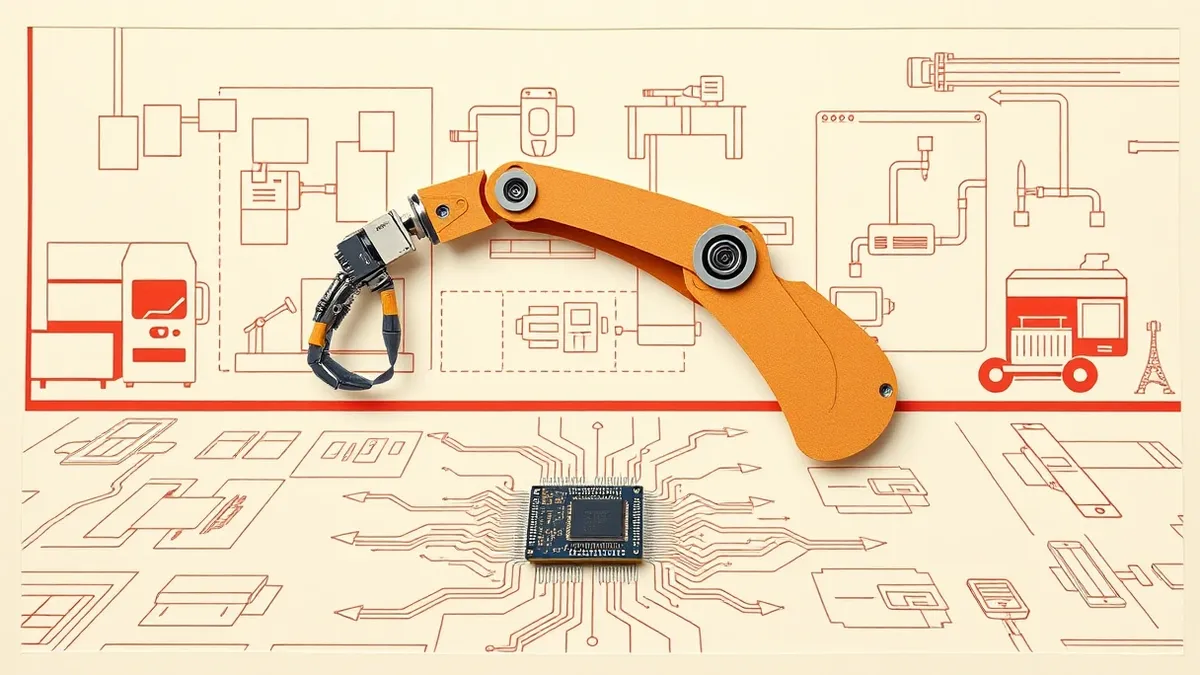
- The agreement aims to integrate artificial intelligence into robots, machinery, and vehicles, a sector Nvidia terms physical AI.
- Nvidia selected four specific German startups for investment, supporting its nearly $10 billion pledge to the European market.
The details
The German economy ministry executed a memorandum of understanding with Nvidia during the Invest in Germany Summit in Berlin, according to The Next Web. Chancellor Friedrich Merz addressed Nvidia CEO Jensen Huang at the opening of the two-day event on Monday. While the ministry has not released detailed terms of the agreement, the collaboration follows prior reports that Germany would announce a partnership with the chipmaker at this specific summit.
Nvidia expanded on the agreement in a corporate blog post, stating that Merz and two government ministries entered into a joint plan with the company. The primary objective is to develop artificial intelligence capable of operating robots, industrial machines, and cars. Nvidia categorizes this specific application of technology as physical AI. This focus aligns with the broader goal of integrating advanced computing into Germany’s manufacturing and transport sectors.
As part of its nearly $10 billion commitment to Europe, Nvidia identified four German startups for investment. The selected companies include Agile Robots, Avelios Medical, Mirelo, and Reflex Aerospace. In addition to startup funding, Siemens and Nvidia agreed to collaborate on AI-operated factories. This collaboration suggests a push toward automating complex industrial processes using advanced neural networks and specialized hardware.
The context
Chancellor Friedrich Merz emphasized that Germany aims to become one of the most advanced global locations for artificial intelligence integration within industry. He stated that AI is driving major changes in the German economy and that cooperation with Nvidia is vital for future growth. Merz faces pressure to boost economic performance as German car manufacturers, chemical companies, and engineers encounter strong overseas competition.
Merz highlighted the Mittelstand, or small and medium-sized enterprises, as Germany’s biggest advantage. He urged these companies to open their doors to AI and utilize existing data, calling it a secret advantage for the nation. A group including Siemens and Deutsche Bank estimated up to 4.1 trillion euros in potential investment in Germany by 2035 across AI, energy, and defense sectors.
What to watch
- Monitor Siemens and Nvidia for updates on specific factory automation projects resulting from their collaboration agreement.
- Watch for additional announcements regarding the four identified startups: Agile Robots, Avelios Medical, Mirelo, and Reflex Aerospace.
- Observe further government statements detailing the scope of the memorandum of understanding signed by the economy ministry.
- Track investment figures from the Made for Germany initiative, which aims for over €850bn by 2028.
What it means for organisations
Organisations should assess how physical AI partnerships affect their supply chain dependencies and data governance policies. Teams usually need to evaluate vendor lock-in risks when integrating specialized AI hardware into critical infrastructure. Check whether existing contracts allow for data sharing with third-party tech providers. Internal stakeholders, including legal, operations, and procurement, must be informed to manage compliance and strategic alignment. Ensure that innovation initiatives do not compromise operational resilience or introduce unvetted external systems into secure environments.
Background: Supply chain attacks
A supply chain attack targets the software or hardware you use before it reaches you. By compromising a trusted vendor, attackers insert malicious code that installs automatically on your systems when you update or deploy the product. This bypasses perimeter defenses because the malicious payload arrives with a valid digital signature.
Read the full guide: Supply Chain Attacks: How Trust Becomes Your Biggest Security Risk
What to do and how to stay safe: Nvidia
- Review current vendor agreements to understand data ownership and usage rights when partnering with major tech firms.
- Assess operational dependencies on specific hardware providers to mitigate supply chain risks.
- Establish clear internal guidelines for adopting external AI technologies in critical manufacturing or transport systems.
- Monitor regulatory developments regarding AI integration in industrial sectors to ensure ongoing compliance.
Step-by-step guide: Secure Home Routers for Small Business Networks
General security guidance from the TechSec Headlines newsroom. It is not confirmed advice from the organisations named in this story.
Frequently asked questions
Which German startups did Nvidia select for investment?
Nvidia identified Agile Robots, Avelios Medical, Mirelo, and Reflex Aerospace for investment as part of its European commitment.
What is the total value of Nvidia's commitment to Europe?
Nvidia has made a nearly $10 billion commitment to Europe, which includes investments in startups and collaborations like the one with Siemens.
What did Chancellor Merz say about the Mittelstand?
Merz stated that the Mittelstand is Germany’s biggest advantage and urged these companies to utilize their existing data for AI integration.