Key points
- Intel officially named the Crescent Island accelerator the GPU D-Series at OCP 2026.
- The chip delivers 1.3 PFLOPS of FP8 compute and up to 480 GB of LPDDR5X memory.
- Products are designed for air-cooled PCIe servers, differing from liquid-cooled competitors.
The short version
- Intel announced the GPU D-Series branding for its Crescent Island AI inference accelerator.
- The hardware targets a theoretical peak of 1.3 PFLOPS in FP8 precision.
- Customer sampling is currently underway, though no broad launch date was provided.
The details
Intel officially branded its Crescent Island AI inference accelerator as the GPU D-Series at the OCP 2026 event. According to Tom's Hardware, the company shared specific performance metrics for the first time during this announcement. The chip is rated for a theoretical peak performance of 1.3 PFLOPS using FP8 precision. This specification defines the compute capability for the new family of products.
The GPU D-Series supports up to 480 GB of LPDDR5X memory. This configuration delivers a memory bandwidth of 1.5 TB/s. These figures were disclosed alongside the product name, adding to the gradual release of information about Crescent Island throughout 2026. The memory capacity and bandwidth are designed to support large-scale inference workloads.
Intel built the Crescent Island chip on its Xe3P graphics architecture. Tom's Hardware notes that this is a massively parallel computing architecture rather than a traditional GPU. The chip lacks most or all of the graphics-specific functional units found in consumer graphics cards. It is optimized strictly for AI inference tasks.
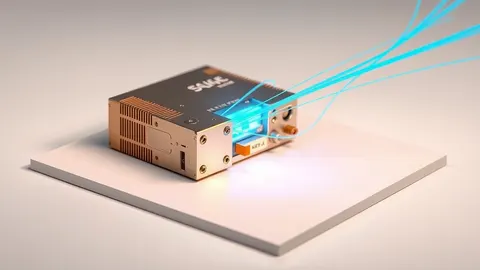
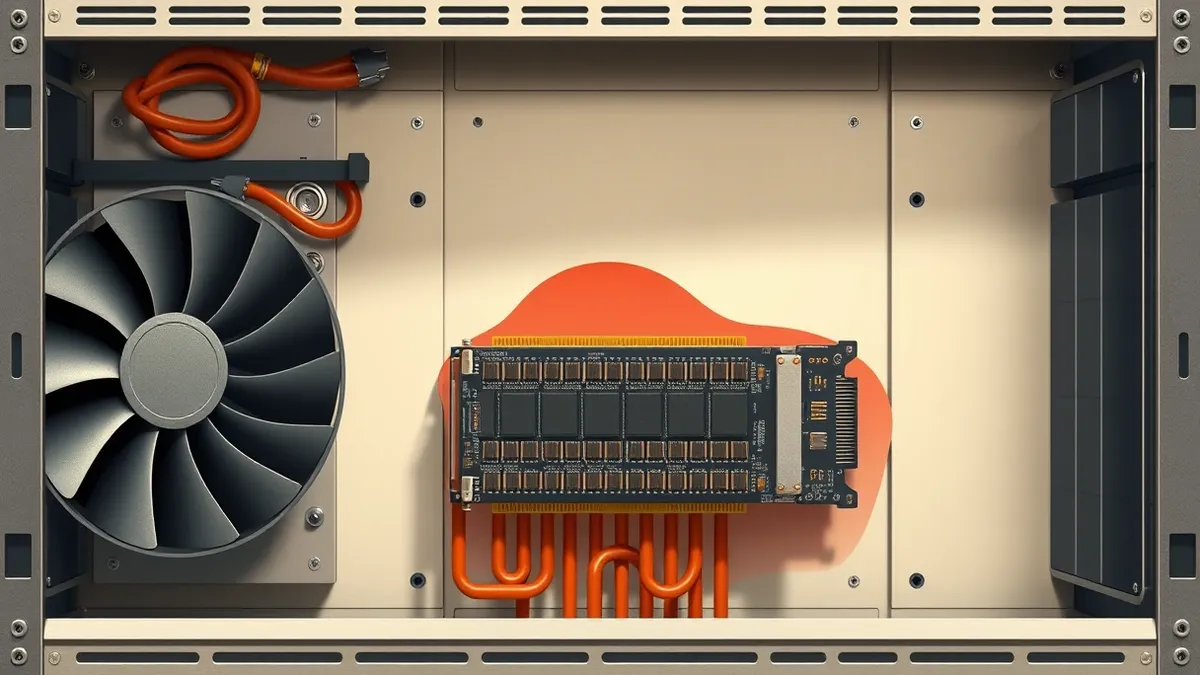
The GPU D-Series products will ship in an air-cooled PCIe form factor. The thermal design power is set at 350W. This physical design allows the accelerators to fit into standard server racks without specialized cooling infrastructure. The form factor contrasts with high-end competitors that require liquid cooling solutions.
Intel states that the GPU D-Series can power inference for models with more than one trillion parameters. The chips are intended for deployment in traditional air-cooled rack servers. These systems can scale up to eight GPUs per node, similar to Nvidia's HGX systems. This setup supports distributed inference across multiple units.
The company highlights the chip's suitability for large language models and long-context inference. It also supports concurrent inference services. These capabilities aim to create a foundation for multi-tenant AI services. Other target workloads include robotics and other latency-sensitive applications.
The context
Nvidia's Rubin GPUs in the Vera Rubin NVL72 system offer 17.5 PFLOPS of FP8 throughput per chip. However, those chips require liquid cooling and have a total graphics power in kilowatts. According to Tom's Hardware, the GPU D-Series targets a different performance envelope and infrastructure requirement. Intel is not competing directly with that specific high-power segment.
Intel relies on a common Xe software foundation for its AI workloads. This software stack spans its Xe Cores in integrated and discrete GPU products. The company aims to bring this consistency to the data center. This approach helps unify development across different hardware types.
Intel is working with a broad ecosystem of partners for the GPU D-Series. This group includes OEMs, ODMs, neoclouds, and independent software vendors. Appliance providers and AI-native companies are also part of the partnership network. Customer sampling of the products is currently in progress.
What to watch
- Monitor for official launch dates and pricing for the GPU D-Series products.
- Watch for software updates to the Xe foundation that support these new accelerators.
- Track adoption rates among OEMs and cloud providers using air-cooled AI servers.
- Observe how the 1.3 PFLOPS FP8 performance compares in real-world inference benchmarks.
What to do and how to stay safe: Intel
- Review your data center cooling capacity to see if air-cooled 350W GPUs fit your current infrastructure.
- Evaluate your AI model sizes to determine if the 480 GB memory limit meets your inference needs.
- Test the common Xe software foundation with your existing AI workloads for compatibility.
- Wait for vendor-provided benchmarks before committing to large-scale procurement of these accelerators.
Step-by-step guide: Shadow AI Mistakes That Put Corporate Data at Risk
General security guidance from the TechSec Headlines newsroom. It is not confirmed advice from the organisations named in this story.
Frequently asked questions
What is the peak performance of the Intel GPU D-Series?
The chip delivers a theoretical peak of 1.3 PFLOPS of FP8 compute performance.
Does the GPU D-Series require liquid cooling?
No, the products are designed for air-cooled PCIe form factors with a 350W TDP.
How much memory does the GPU D-Series support?
The accelerator supports up to 480 GB of LPDDR5X memory with 1.5 TB/s bandwidth.